
Global IoT Connectivity for Connected Products
Deploying connected devices is rarely as simple as it looks on paper.
What begins as a single deployment can quickly evolve into a complex mix of networks, regions, and operational constraints. Devices move, coverage changes, and managing multiple connectivity providers introduces friction that slows down development. OV, part of the Manx Telecom Group, provides global IoT connectivity infrastructure designed to remove that complexity. It enables organisations to deploy, manage, and scale connected products with greater clarity and control. With connectivity across 180+ countries and 600+ networks, OV supports devices wherever they operate, without requiring multiple providers or fragmented systems.
Explore OV Connectivity Solutions- Manx Telecom
- Business
- IoT
The Reality of Global IoT Connectivity
For many organisations, connectivity becomes the limiting factor in scaling IoT deployments.
Devices rarely stay within a single geography. Fleet vehicles cross borders, payment terminals are deployed across multiple regions, and assets move through environments where network performance varies significantly.
To compensate, teams often rely on multiple carriers. While this can extend coverage, it introduces new challenges. Visibility becomes fragmented, troubleshooting slows, and managing connectivity across providers becomes operationally complex.
Over time, connectivity shifts from being an enabler to becoming a constraint on product performance and growth.
A More Practical Approach to Global IoT Connectivity
A different approach is required when connectivity becomes part of the product itself.
OV operates as a Global IoT Mobile Network Operator, providing a unified connectivity architecture rather than a collection of regional agreements. Devices can access multiple mobile networks through a single SIM, while connectivity is managed centrally through a dedicated platform.
This approach enables organisations to:
- deploy devices globally without changing providers
- maintain consistent connectivity behaviour across regions
- manage connectivity as part of their product infrastructure
Instead of adapting products to fit connectivity limitations, connectivity is designed to support how products are built and deployed.


Understanding IoT Connectivity Architecture
Behind every connected device is an architecture that determines how reliably it will perform at scale.
At a basic level, IoT connectivity allows devices to connect to mobile networks and transmit data. In practice, global deployments rely on a combination of roaming agreements, network selection logic, and connectivity management platforms.
Many providers operate as aggregators, building platforms on top of third-party network agreements. Others operate with direct integration into mobile network infrastructure.
This distinction becomes important as deployments scale. It influences how devices behave across regions, how issues are diagnosed, and how much control technical teams retain over connectivity.
For organisations building connected products, understanding this architecture is key to making informed decisions about long-term scalability and reliability.
Built Around Real-World IoT Deployments
Connectivity requirements vary depending on the application, but the underlying need remains the same. Devices must stay connected reliably, regardless of where they operate.
In fleet and telematics deployments, connectivity supports real-time tracking, compliance, and increasingly, video data transmission. Interruptions affect not just visibility, but operational performance.
Payment systems rely on consistent, secure connections. Even brief disruptions can impact transactions and customer experience.
Asset tracking solutions must balance global coverage with power efficiency, often operating across borders with limited physical access to devices.
In safety and telecare environments, connectivity becomes critical. Devices are expected to function reliably in unpredictable conditions, often when they are needed most.
OV is designed to support these types of deployments, where connectivity is not optional, but fundamental to how the product operates.



eSIM, eUICC and the Future of IoT Connectivity
As IoT deployments expand globally, the way connectivity is provisioned is evolving.
Traditional SIM models rely on physical distribution and fixed network relationships. This can introduce logistical complexity as deployments scale across regions.
eSIM and eUICC technologies enable a more flexible model. Connectivity profiles can be provisioned and updated remotely, allowing devices to adapt without physical intervention.
For device manufacturers and platform teams, this changes how connectivity is managed across the device lifecycle. It reduces operational overhead and supports more scalable deployment models.
OV supports both traditional IoT SIM and eSIM architectures, allowing organisations to choose the approach that aligns with their product and deployment strategy.

Control and Visibility with a Connectivity Management Platform
As deployments scale, visibility becomes just as important as coverage.
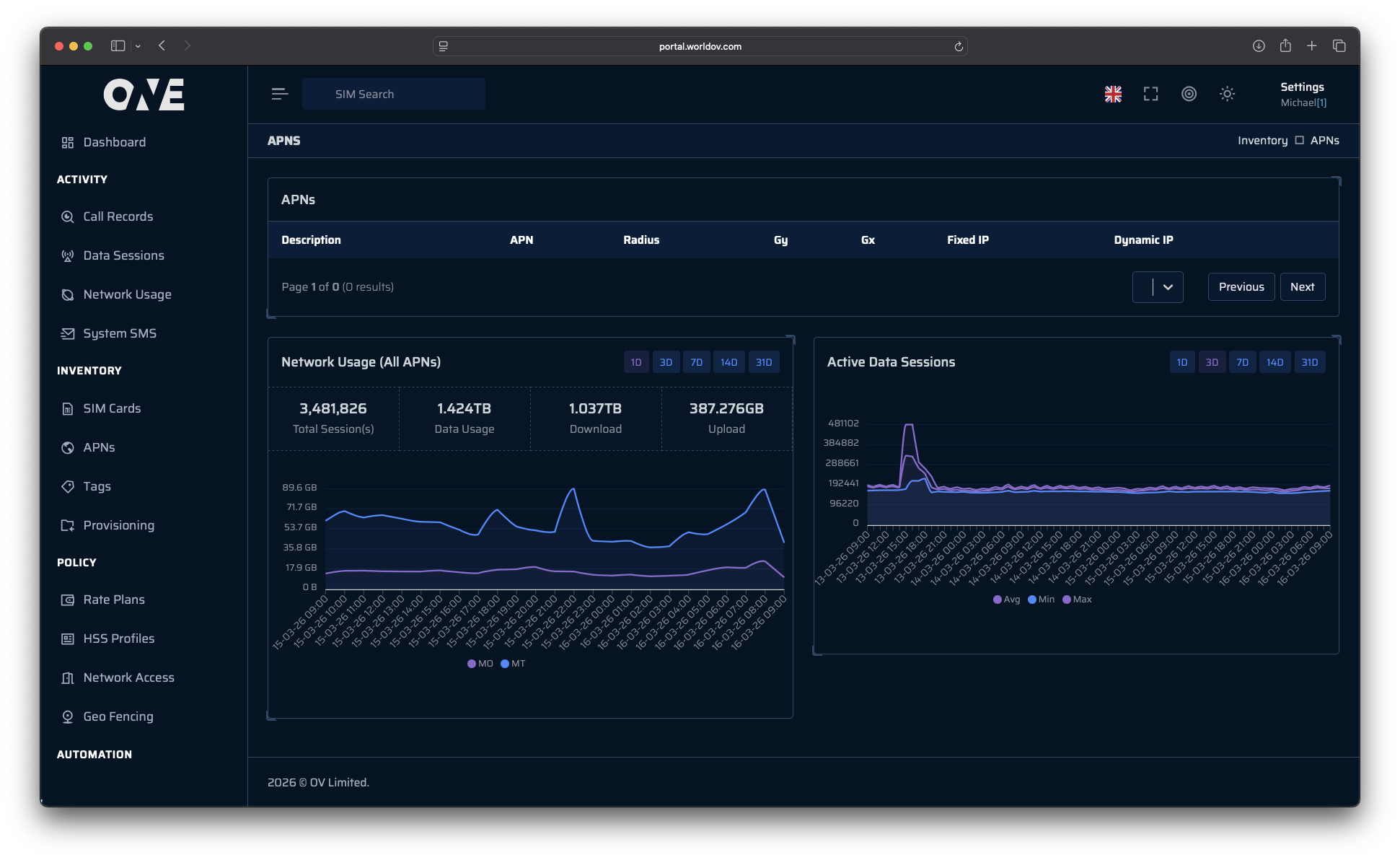
OV ONE, the connectivity management platform developed by OV, provides a centralised way to manage IoT connectivity across global deployments.
Through a single interface or API, teams can monitor connectivity in real time, manage SIM lifecycles, and integrate connectivity into their broader systems.
This allows connectivity to become part of the overall product architecture, rather than a separate operational layer.
When teams have visibility and control over how devices connect and behave, they can operate more efficiently and respond more quickly to issues.
Choosing an IoT Connectivity Provider
Selecting an IoT connectivity provider is not just a question of coverage.
For organisations deploying connected products, the decision often comes down to how connectivity performs over time and how easily it integrates into their systems.
Different providers approach this in different ways, from platform-led models to managed service offerings.
OV is designed for organisations that need to manage connectivity as part of their product infrastructure, with control, visibility, and global reach built in from the start.

1. Multi-Network
How devices connect across multiple networks
2. Management
How connectivity is monitored and managed

3. Integration
How easily connectivity integrates with existing platforms

4. Predictability
How predictable connectivity behaviour is at scale
Built on Telecommunications Expertise
OV is part of the Manx Telecom Group, combining modern IoT connectivity infrastructure with long-standing telecommunications expertise.
This foundation supports reliable network performance, operational resilience, and a deeper level of integration with mobile network infrastructure.
For organisations deploying IoT at scale, this provides confidence that connectivity is not layered on top, but built into the underlying network.

Start Building with OV
As connected products scale, connectivity needs to support growth without introducing complexity. OV provides the infrastructure and platform needed to deploy and manage IoT connectivity globally, helping organisations move from initial deployment to large-scale operation with greater confidence.
Explore OV Solutions